Advances in silicon integrated electronics have enabled many significant systems and applications in the terahertz (THz) band over the last decade. However, ultra-low-power (<25mW) or battery-less THz transceivers have not been explored yet due to the stringent challenges posed by them. Likewise, the notion of wireless power transfer at THz frequency is non-existence. There is a growing demand for low-power mm-size transceivers in supply chain management, assets tracking, authentication, micro-robotics, on-skin or close-to-skin implants, etc. With these ubiquitous THz-links, the security of the wireless channels is another emerging challenge. Advanced digital encryption techniques are computationally intensive, power-hungry, and not suited for these low-power applications. In this talk, I will explain the challenges and novel approaches to realizing physically secure and ultra-low-power THz transceivers. Specifically, I will discuss three research directions that will open up the THz band. The first is a mm-size THz identification tag enabling mW level THz link by exploiting backscattering and beam-steering functionalities. The second is optimization based on dual-antenna architecture for THz energy harvesting with ~25mW harvesting capability. And the third is developing an orbital-angular-momentum wave-based physical layer security scheme for secret key distribution at THz frequencies.
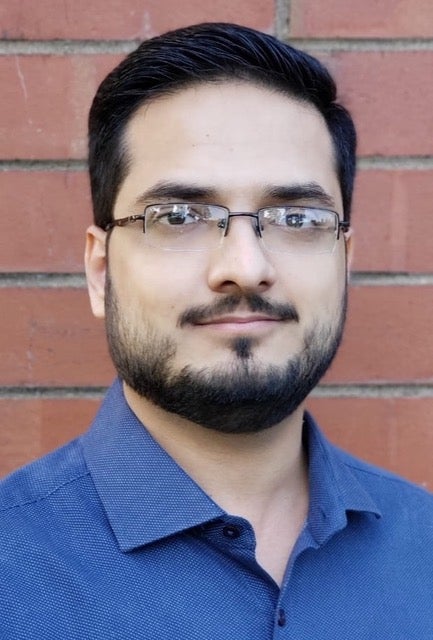
M. Ibrahim Wasiq Khan received the B.E. degree (Hons.) in electrical engineering from the National University of Science and Technology (NUST), Islamabad, Pakistan in 2012, and the M.Sc. degree in electrical engineering from the Korea Advanced Institute of Science and Technology (KAIST), Daejeon, South Korea in 2016, where he worked on THz detectors and THz imaging systems based on CMOS technology. He is currently pursuing a Ph.D. degree with the Electrical Engineering and Computer Science (EECS) Department, Massachusetts Institute of Technology (MIT), Cambridge, MA, USA, where he is working on CMOS-based THz identification tags, THz energy harvesting systems, and THz-OAM secure transceivers. Mr. Khan is a recipient of the IEEE MTT-S Graduate Fellowship. He was awarded IEEE Radio Frequency Integrated Circuits (RFIC) Symposium Best Student Paper Award (First Place) in 2021. He also received the Rector's Silver Medal for his B.E. degree.


